














The Trump administration is relying on a sharply different legal justification for seizing a Venezuelan oil tanker than striking alleged narco-traffickers, even if both moves are intended to ramp up pressure on Venezuelan leader Nicolas Maduro.
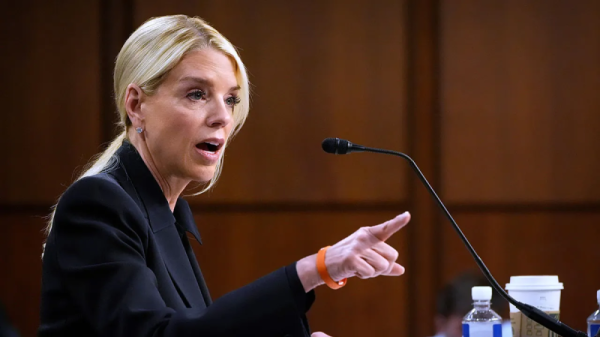
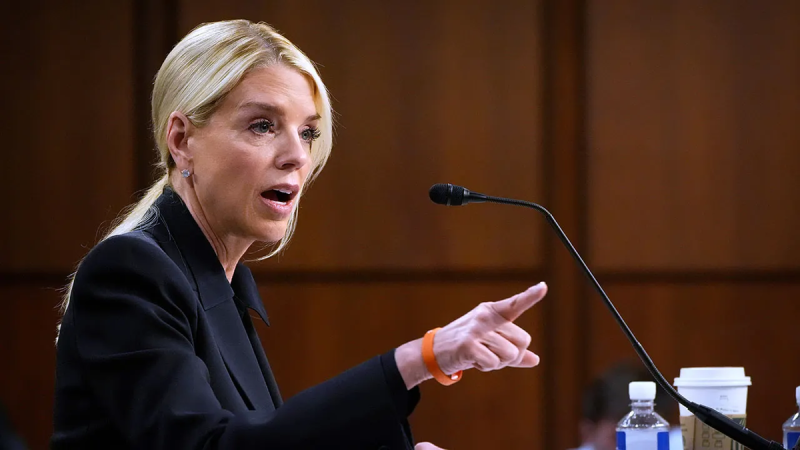
Attorney General Pam Bondi on Thursday framed the U.S. seizure of a Venezuelan crude oil tanker as a straightforward sanctions enforcement action rooted in a federal court warrant. Bondi said the tanker, long sanctioned for moving illicit Venezuelan and Iranian oil in support of foreign terrorist organizations, was taken into custody by the Coast Guard with help from the War Department after investigators executed a warrant off the coast of Venezuela.
A senior administration official told Fox News the sanctions designation is the sole legal basis for seizing the ship — not the armed-conflict authority the administration has invoked to justify kinetic strikes on drug-trafficking vessels. The distinction highlights the administration’s reliance on two very different legal frameworks in the same region: traditional sanctions and forfeiture statutes for the tanker, and a contentious assertion of wartime authority against drug cartels for the maritime strikes.
The tanker, known as the Skipper, has been on a U.S. sanctions list for several years for allegedly moving crude tied to a clandestine Venezuela–Iran oil network that Washington says helped generate revenue for foreign terrorist organizations.
According to officials, that designation rendered the vessel ‘blocked property’ under U.S. law, allowing the Justice Department to seek and obtain a federal warrant to seize it under civil forfeiture statutes. That process — rooted in domestic law and executed through a U.S. court — is the basis for Thursday’s operation, administration officials said.
While the administration argues the seizure is fully authorized under U.S. sanctions and forfeiture law, the use of domestic legal authorities to detain a foreign vessel on the high seas historically has generated debate in maritime law circles, particularly when the ship is not under the U.S. flag. The allegation that the Skipper was stateless or fraudulently flagged could prove significant in that debate.
If true, ‘the U.S. could treat this vessel as ‘stateless’ and subject to seizure since it is otherwise acting in violation of U.S. law,’ law professor Julian Ku told Fox News Digital. ‘That would be the strongest legal basis.’
Under the sanctions framework, the government is not claiming battlefield authority or self-defense powers. Instead, officials are relying on the International Emergency Economic Powers Act and related OFAC regulations, which allow the U.S. to target property linked to sanctioned entities, even when that property is located abroad.
A senior administration official emphasized that this is the only legal theory the government is using for the Skipper seizure and said it carries none of the Article II wartime arguments the administration has invoked to justify its strikes on cartel boats in international waters.
The result is a civilian enforcement action carried out with help from the military, alongside a separate military campaign premised on the assertion that the United States is ‘at war’ with foreign drug cartels. But both efforts are rooted in what onlookers believe to be the president’s intended goal: pressuring Maduro to step down from power.