Americans are more worried about political violence under Trump
By
Published
In the wake of an apparent second attempt on his life earlier this month, former president Donald Trump began once again amplifying the idea that the twin threats were a function of Democratic rhetoric.
He and his allies had done the same thing in the wake of his being grazed by a bullet in Butler, Pa., earlier this year, but it proved difficult to tie the shooterâ€s motivation to any particular point of view — much less to the Democratic Party. (As a result, Trump supporters began vaguely hand-waving about how some nebulous “theyâ€� had tried to take Trumpâ€s life, allowing them to blame Democrats in absentia.) It was easier to draw a connection after the disrupted plot in Florida, given the suspectâ€s online condemnation of Trump as a threat to democracy. But he, too, wasnâ€t a Democrat and had voted for Trump in 2016.
The political rationale here is obvious. Many Republicans undoubtedly think that rhetoric about what might follow Trumpâ€s reelection is overblown, and that dire warnings about a second Trump presidency are unwarranted alarmism that might trigger violent outbursts. But many Republicans also presumably understand that elevating the idea that Democrats promote political violence might help neutralize criticisms of Trumpâ€s own verbiage. If Trump allies can get Democrats to be wary of arguing that Trump poses such a threat or if they can get voters to view the threat posed by Trump as relatively overblown, thatâ€s a political win.
New polling from CNN, conducted by SSRS, suggests that the effort to draw equivalence between right and left isn’t yet working.
Americans broadly agree that the amount of political violence the country is experiencing is a major problem. Democrats and Republicans are slightly more likely than independents to offer that opinion.
Americans also generally believe that the tone of political rhetoric encourages violence. Notably, Democrats are eight percentage points more likely than Republicans to say that this is the case — a gap that doesnâ€t comport with the idea that Republicans see Democratic rhetoric in quite the same way that Democrats view Republican rhetoric.
The pollsters also asked how the threat of political violence might evolve depending on who wins the November election. And on that question, the failure of Trump and his allies to draw equivalence with the Democrats was most apparent.
A plurality of Americans said that political violence would get worse if Vice President Kamala Harris wins the presidential election — but more than half said either that there would be little change or it would improve. On the other hand, a majority of Americans said that a Trump victory would make political violence worse.
The partisan divide on these questions is about what youâ€d expect: Most Republicans say violence would get worse if Harris wins, while a majority of Democrats say thatâ€s true should Trump win. But thereâ€s a difference in scale. While two-thirds of Republicans say violence would be worse under Harris, nearly 9 in 10 Democrats say it would grow worse under Trump. Most independents agreed that political violence would worsen under Trump, while a majority said that it would improve or remain the same under Harris.
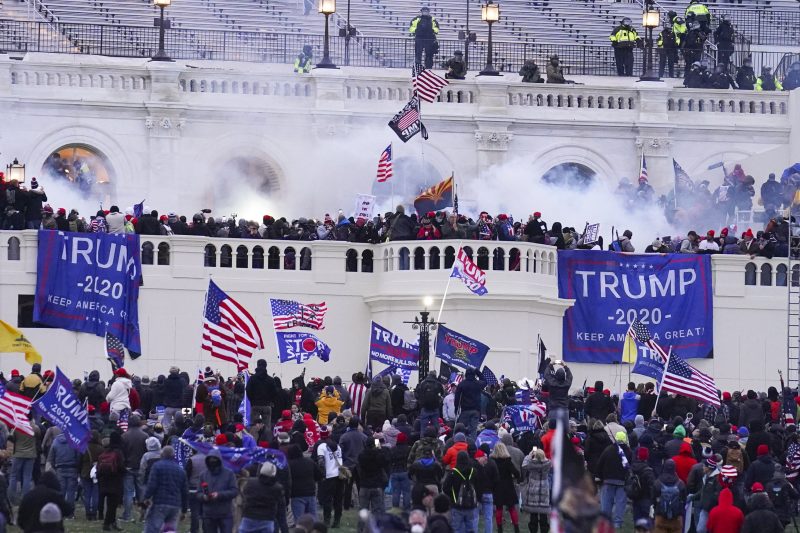
In fairness to Trump, the most significant political violence that the United States has seen over the past few decades (if not since the Civil War) was the riot at the Capitol on Jan. 6, 2021. While that was unequivocally a function of Trumpâ€s false claims about the election being stolen, it did occur after Trump lost the election.
Itâ€s likely, though, that respondents to the CNN poll werenâ€t playing semantic games about Trump winning or losing. They were probably instead responding to their observations about years of Trumpâ€s public rhetoric and the responses that rhetoric engenders from his supporters. From attacking FBI offices to storming the Capitol, itâ€s much easier to draw a line from what Trump says to what people who explicitly support him do than it is to draw such a line for Harris.
Extremist supporters of former president Donald Trump are lashing out online against Usha Vance, the wife of Trumpâ€s running mate, Sen. J.D. Vance (R-Ohio),...
Australia is home to a thriving tech sector with investment opportunities across a variety of subsectors. The tech sector contributed about AU$167 billion to...
Sister Stephanie Schmidt had a hunch about what her fellow nuns would discuss over dinner at their Erie, Pennsylvania, monastery on Wednesday night. The...