

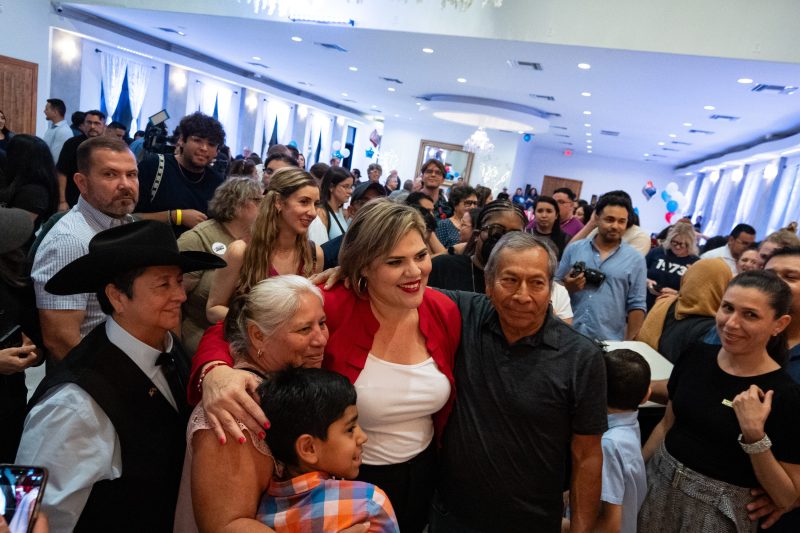
PHOENIX — When Rep. Ruben Gallego (D-Ariz.) decided to run for Senate, it provided a rare opening in one of the safest congressional districts in the state for Democrats and set up a fiercely competitive and expensive primary.
The July 30 primary results were close and after an automatic recount, the top two contenders were separated by just 39 votes.
Typically, such a narrow outcome would result in a legal battle to ensure all votes were properly cast and counted — but this is Arizona, where former president Donald Trump and Republicans have criticized the voting systems for years, especially in the Phoenix area. Kari Lake, the Republican running against Gallego for Senate, is still legally challenging her defeat in the 2022 governorâ€
The congressional candidates and key Arizona Democratic Party figures were fearful that casting doubt on the result would draw claims from Trump and his allies that Democrats were “election deniers,â€� according to five Democrats and a Republican closely familiar with the race who spoke on the condition of anonymity to candidly discuss private conversations. Questioning the outcome, they said, carried the risk that the former president would cite complaints made by Democrats about the legitimacy of the stateâ€
Plus, neither of the Democratic candidatesâ€
“The conversation was mindful of those conflicts,â€� said one Democrat familiar with the losing candidateâ€
The close primary illustrates the challenge facing Democrats around the country — especially in battleground states — who may face the prospect of challenging razor-thin outcomes in November. After defending the nationâ€
Arizonaâ€
The race to replace him was blistering and expensive, pitting two progressive front-runners against each other: Yassamin Ansari, a former Phoenix City Council member who years ago advocated for climate change as a policy adviser at the United Nations, and Raquel Terán, a former state lawmaker, one-time chair of the state Democratic Party and community activist. The race offered an up-close view into fissures within the partyâ€
Both candidates focused heavily on their relationships with constituents within the district and their professional records. Ansari, the 32-year-old daughter of Iranian immigrants, was considered an underdog and emphasized her work on the city council to try to make housing more affordable, to tackle climate change and protect access to abortion. Terán, who was born in an Arizona border town, was largely considered the front-runner and had the backing of influential party figures, like Sen. Mark Kelly (D) and Planned Parenthoodâ€
With the candidates largely agreeing on policy, they emphasized their historic backgrounds, youth and leadership styles. Their allies, meanwhile, criticized campaign donations by those who had previously given money to Republicans or conservative causes and questioned the opposing candidatesâ€
The race saw more than $5.6 million in ad spending, according to data from AdImpact — an unprecedented level in this district. As early voting began and the campaigns knocked on doors to turn out voters in the searing heat, no one knew how it would end.
It didnâ€
Ansari, who held the advantage, did not claim victory; Terán did not concede.
“We are still hard at work ensuring that every vote is counted,� Ansari said.
Terán said: “We know as Democrats, especially here in Arizona, how important it is for every vote to get counted.�
The race headed to an automatic recount under a state law passed after Trumpâ€
“Having the very team who defended Arizonaâ€
During video meetings and phone calls, Terán and her campaign weighed her path forward, two people recalled. Terán did not respond to a request for comment.
“It was the campaignâ€
“We looked very closely at everything, we asked a lot of questions,â€� the person said. “I donâ€
Teránâ€
“You all must be exhausted,� the judge said before opening the envelope and sliding out the paperwork.
“Yassamin Ansari received 19,087 and Raquel Terán received 19,048 votes,� the judge said. “This means the higher vote-getter is Yassamin Ansari.�
Ansari had added no new votes during the re-tally while Terán had picked up three. In the end, just 39 votes separated the candidates — three votes less than the original 42-vote margin. Errors sometimes happen during elections and when election officials checked their work during the recount, they found three differences that favored Terán:
- When counting a batch of early ballots, one was not tabulated in the original count because of a machine jam. The ballot was counted during the recount, adding a vote for Terán.
- One voter filled in the oval next to Teránâ€
- Another voter marked the oval next to Teránâ€
Terán quickly and publicly conceded, and called Ansari to congratulate her.
“The rest of the country should feel assured that Maricopa County and Arizona run a phenomenal election, and they are diligent, they are tireless, they are meticulous,� Ansari said at a victory event inside of a sheet metal workers shop. “Whoever wins in November, I trust that the election will run perfectly.�
Dan Keating contributed to this report.