
First Israel ignored a U.S.-led effort to impose a cease-fire in its escalating war against Hezbollah. Then it killed the militant movementâ€

The widening gap between U.S. desires and Israeli behavior has left the administration struggling to adapt its diplomatic efforts to accommodate Netanyahuâ€
With many U.S. officials now embracing Israelâ€
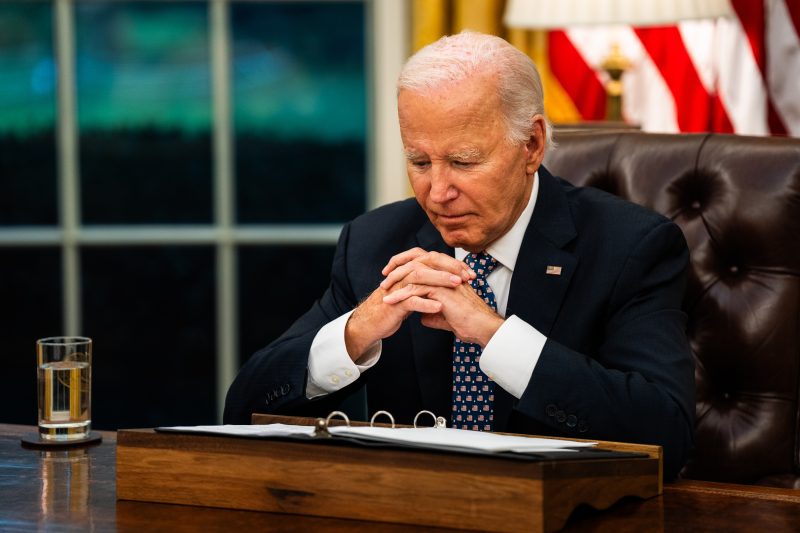
President Joe Biden has made clear his desire for an immediate halt to the fighting. Asked at the White House on Monday whether he was aware that Israel was preparing a limited incursion into Lebanon, he said: “Iâ€
The Biden administration claims that it has been able to shape Israeli policy in recent days, most recently convincing Netanyahu this weekend to launch only a limited ground incursion into southern Lebanon rather than the full-scale invasion he had been contemplating. But U.S. officials have been forced repeatedly to revise their red lines, retroactively justifying Israeli decisions that ahead of time they declared would be foolhardy.
U.S. officials have been split over the wisdom of the Israeli campaign against Hezbollah, especially since Fridayâ€
“We of course continue to support a cease-fire,â€� State Department spokesman Matthew Miller told reporters Monday. “But at the same time, there are a couple other things that are true as well, which is that, number one, military pressure can, at times, enable diplomacy. Of course, military pressure can also lead to miscalculation. It can lead to unintended consequences, and weâ€
The events of the last year have shown the limits of the Biden administrationâ€
“Itâ€
The degree to which the two sides appear to be talking past each other was readily apparent last week on the sidelines of the U.N. General Assembly, where senior U.S. officials assembled an international coalition that backed a cease-fire between Israel and Hezbollah. The deal was announced late Wednesday, only to be followed by silence from the Israeli side on Thursday. By Friday, senior Israeli officials were telling reporters that they had never seriously contemplated the cease-fire terms and that Netanyahuâ€
U.S. policy has evolved as Israel has pressed ahead. Some Biden administration officials have come around to the idea of Israel trying to deliver a decisive blow to Hezbollah when the group is in crisis. Two senior U.S. officials said the calculus has changed from just a few weeks ago, given the militant groupâ€
While the Biden administration has focused much of its efforts for nearly a year on preventing an escalation between Israel and Hezbollah, some officials have been impressed by Israelâ€
Still, senior officials over the weekend said they were advising Israel against a ground invasion of Lebanon, warning that such a move could backfire by building political support for Hezbollah inside the country and unleashing unpredictable consequences for civilians and Iranian involvement.
It has not always been clear that Israeli officials are communicating their goals to their U.S. counterparts.
At the military-to-military level, thereâ€
The lack of communication has stymied the U.S. ability to have input into how the war is prosecuted — with risks for Washington as it marshals U.S. forces to the region in a bid to warn Iran against retaliation.
If Israelâ€
A U.N. resolution put in place to end the 2006 Israel-Lebanon war called for Hezbollah to pull back its forces north of the river. But the resolution has no enforcement mechanism, and Young said he suspects that the Israelis might want to take land as leverage to force Hezbollah to comply and pledge to stay there.
But “a ground war is more complicated for the Israelis because Hezbollah knows the terrain,â€� Young said. And even if Hezbollah pulls back now, he said, “I donâ€
As they awaited Israelâ€
Particularly within the elite Islamic Revolutionary Guard Corps (IRGC), “there is a lot of discontent … that if Iran had taken bigger risks, it would not have basically signaled to the United States and Israel that they can get away with this kind of decapitation of the Iranian military and its allies� such as Hezbollah, said Ali Vaez, head of the Iran program at the International Crisis Group.
Iranâ€
The United States was “lying� about its efforts to arrange a Gaza cease-fire between Israel and Hamas, Pezeshkian said in an interview last week as Israeli airstrikes intensified in Lebanon. He called for the Islamic world to join together and not “abandon� Hezbollah.
But Pezeshkianâ€
“I think theyâ€
Still, Tehran has been consistent in seeking to avoid any confrontation that would draw in the United States, analysts said.
“Iran understands that if it were to attack Israel today, the Israeli response would be much more powerful than the restrained response it had in April,â€� said Matthew Levitt, an expert on Hezbollah at the Washington Institute for Near East Policy. “The one thing that Iran doesnâ€