
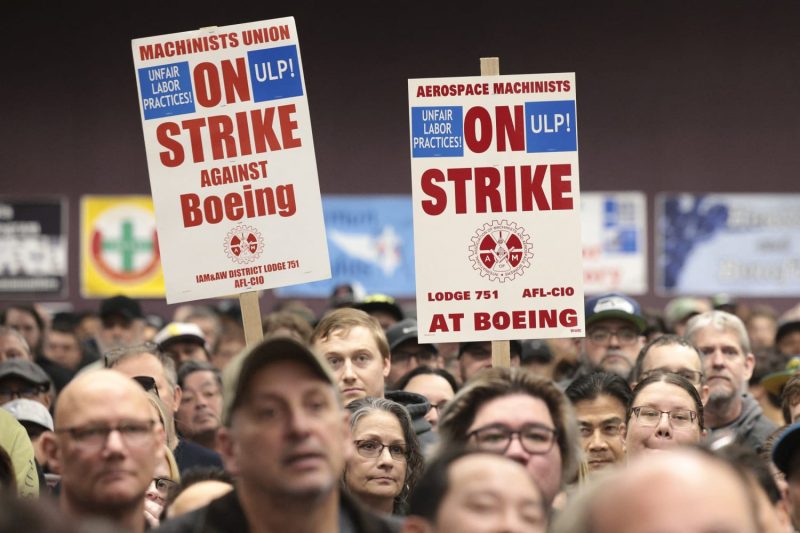
Boeing machinists voted against a new labor deal that included 35% wage increases over four years, their union said Wednesday, extending a more than five-week strike that has halted most of the companyâ€

The contractâ€
The strike is costing the company about $1 billion a month, according to S&P Global Ratings.
New CEO Kelly Ortberg had said reaching a deal with machinists was a priority in order to get the company back on track after years of safety and quality problems.
“My focus is getting everybody looking forward, get them back to work, improve that relationship,â€� Ortberg told CNBCâ€
Ortbergâ€
Boeingâ€
The latest proposal, announced last Saturday, included 35% raises over four years, increased 401(k) contributions, a $7,000 bonus and other improvements.
Workers had pushed for higher pay amid a surge in living costs in the Puget Sound area. Some machinists were upset about losing their pension plan in a previous contract that they signed in 2014, but the latest proposal didnâ€
Boeing agreed in the new contract to build its next aircraft in the Pacific Northwest, which had also been a sticking point with unionized workers after Boeing moved all of its 787 Dreamliner production to a non-union factory in South Carolina.
“We have made tremendous gains in this agreement. However, we have not achieved enough to meet our membersâ€
Boeing declined to comment on the voting results.
The labor strife is the latest in a long list of problems at Boeing, which started the year when a door plug blew out midair from a packed Boeing 737 Max 9, its best-selling plane, reigniting regulator scrutiny of the company.
The strike began as Boeing was working to ramp up production of the 737 and other aircraft.
The extended stoppage is also a challenge for the aerospace supply chain, which is fragile coming out of the pandemic, as the companyâ€
Spirit AeroSystems last week said it would temporarily furlough about 700 workers and that layoffs or other furloughs are possible if Boeing machinistsâ€