
If the Covid era marked a boom time for digital health companies, 2024 was the reckoning.
In a year that saw the Nasdaq jump 32%, surpassing 20,000 for the first time this month, health tech providers largely suffered. Of 39 public digital health companies analyzed by CNBC, roughly two-thirds are down for the year. Others are now out of business.
There were some breakout stars, like Hims & Hers Health, which was buoyed by the success of its popular new weight loss offering and its position in the GLP-1 craze. But that was an exception.
While there were some company-specific challenges in the industry, overall it was a “year of inflection,â€� according to Scott Schoenhaus, an analyst at KeyBanc Capital Markets covering health-care IT companies. Business models that appeared poised to break out during the pandemic havenâ€

“The pandemic was a huge pull forward in demand, and weâ€
In 2021, digital health startups raised $29.1 billion, blowing past all previous funding records, according to a report from Rock Health. Almost two dozen digital health companies went public through an initial public offering or special purpose acquisition company, or SPAC, that year, up from the previous record of eight in 2020. Money was pouring into themes that played into remote work and remote health as investors looked for growth with interest rates stuck near zero.
But as the worst waves of the pandemic subsided, so did the insatiable demand for new digital health tools. Itâ€
“What weâ€
Progyny, which offers benefits solutions for fertility and family planning, is down more than 60% year to date. Teladoc Health, which once dominated the virtual-care space, has dropped 58% and is 96% off its 2021 high.
When Teladoc acquired Livongo in 2020, the companies had a combined enterprise value of $37 billion. Teladocâ€
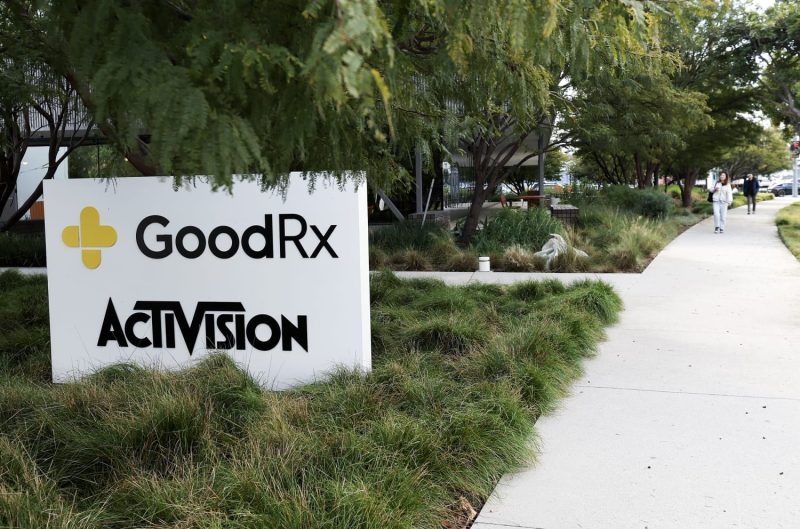
GoodRx, which offers price transparency tools for medications, is down 33% year to date.
Schoenhaus says many companiesâ€
Progyny cut its full-year revenue guidance in every earnings report in 2024. In February, Progyny was predicting $1.29 billion to $1.32 billion in annual revenue. By November, the range was down to $1.14 billion to $1.15 billion.
GoodRx also repeatedly slashed its full-year guidance for 2024. What was $800 million to $810 million in May shrank to $794 million by the November.
In Teladocâ€
“This has been a year of coming to terms with the growth outlook for many of my companies, and so I think we can finally look at 2025 as maybe a better year in terms of the setups,� Schoenhaus said.
While overzealous forecasting tells part of the digital health story this year, there were some notable stumbles at particular companies.
Dexcom, which makes devices for diabetes and glucose management, is down more than 35% year to date. The stock tumbled more than 40% in July — its steepest decline ever — after the company reported disappointing second-quarter results and issued weak full-year guidance.
CEO Kevin Sayer attributed the challenges to a restructuring of the sales team, fewer new customers than expected and lower revenue per user. Following the report, JPMorgan Chase analysts marveled at “the magnitude of the downside� and the fact that it “appears to mostly be self-inflicted.�
Genetic testing company 23andMe had a particularly rough year. The company went public via a SPAC in 2021, valuing the business at $3.5 billion, after its at-home DNA testing kits skyrocketed in popularity. The company is now worth less than $100 million and CEO Anne Wojcicki is trying to keep it afloat.
In September, all seven independent directors resigned from 23andMeâ€
Wojcicki has repeatedly said she intends to take 23andMe private. The stock is down more than 80% year to date.
Investors in Hims & Hers had a much better year.
Shares of the direct-to-consumer marketplace are up more than 200% year to date, pushing the companyâ€
Hims & Hers began prescribing compounded semaglutide through its platform in May after launching a new weight loss program late last year. Semaglutide is the active ingredient in Novo Nordiskâ€
Hims & Hers will likely have to contend with dynamic supply and regulatory environments next year, but even before adding compounded GLP-1s to its portfolio, the company said in its February earnings call that it expects its weight loss program to bring in more than $100 million in revenue by the end of 2025.
Doximity, a digital platform for medical professionals, also had a strong 2024, with its stock price more than doubling. The companyâ€
Doximity primarily generates revenue through its hiring solutions, telehealth tools and marketing offerings for clients like pharmaceutical companies.
Leerinkâ€
“DOCS is a rare company in healthcare IT as it is already profitable, generates strong incremental margins, and is a steady grower,� Leerink analysts, including Cherny, wrote in a November note. The firm raised its price target on the stock to $60 from $35.
Another standout this year was Oscar Health, the tech-enabled insurance company co-founded by Thrive Capital Managementâ€
Oscar showed strong revenue growth in its third-quarter report in November. Sales climbed 68% from a year earlier to $2.4 billion.
Additionally, two digital health companies, Waystar and Tempus AI, took the leap and went public in 2024.
The IPO market has been largely dormant since late 2021, when soaring inflation and rising interest rates pushed investors out of risk. Few technology companies have gone public since then, and no digital health companies held IPOs in 2023, according to a report from Rock Health.
Waystar, a health-care payment software vendor, has seen its stock jump to $36.93 from its IPO price of $21.50 in June. Tempus, a precision medicine company, hasnâ€
“Hopefully, the valuations are more supportive of opportunities for other companies that have been lingering in the background as private companies for the last several years.� Schoenhaus said.
Several digital health companies exited the public markets entirely this year.
Cue Health, which made Covid tests and counted Google as an early customer, and Better Therapeutics, which used digital therapeutics to treat cardiometabolic conditions, both shuttered operations and delisted from the Nasdaq.
Revenue cycle management company R1 RCM was acquired by TowerBrook Capital Partners and Clayton, Dubilier & Rice in an $8.9 billion deal. Similarly, Altaris bought Sharecare, which runs a virtual health platform, for roughly $540 million.
Commure, a private company that offers tools for simplifying cliniciansâ€
“There was a lot of competition that entered the marketplace during the pandemic years, and weâ€
Cherny said the sector is adjusting to a post-pandemic period, and digital health companies are figuring out their role.
“Weâ€