
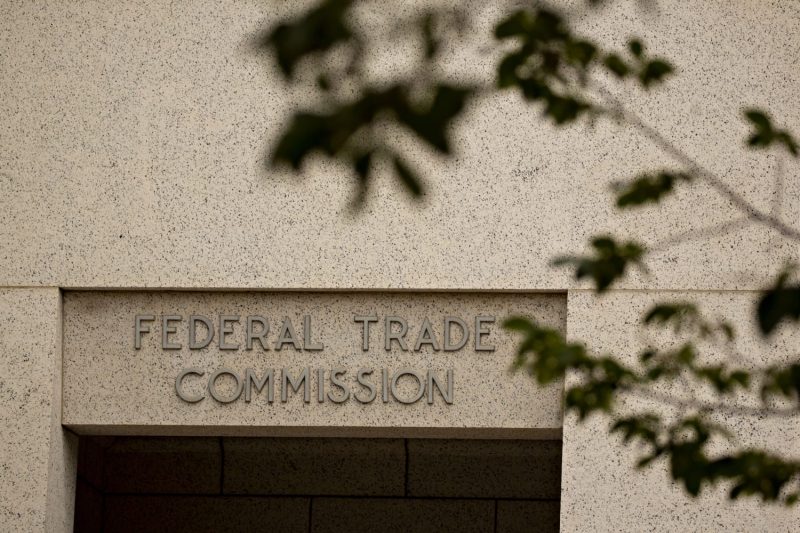
The Federal Trade Commission said Friday that it is suing three drug middlemen, accusing them of inflating insulin prices.
The FTC accused the ‘Big Three’ pharmacy benefit managers (PBMs) — UnitedHealth Group’s Optum Rx, CVS Health’s Caremark and Cigna’s Express Scripts — of ‘engaging in anticompetitive and unfair rebating practices that have artificially inflated the list price of insulin drugs, impaired patientsâ€

PBMs work with insurance companies to negotiate discounted prices from drug companies in exchange for including the drugs in their coverage. In theory, they are supposed to save patients money.
Also included in the lawsuit are the PBMs’ group purchasing organizations, which include Zinc Health Services, Ascent Health Services and Emisar Pharma Services.
The ‘Big Three’ oversee around 80% of all prescription drug plans in the U.S., according to the complaint, which alleges that they created a rebate system prioritizing high rebates from drug manufacturers, which led to the inflated insulin prices.
‘This perverse system results in billions of dollars in rebates and fees for the PBMs and their health plan sponsor clients — but does so at the expense of certain vulnerable diabetic patients who must pay significantly more out-of-pocket for their critical medications,’ the FTC said in a news release.
In a statement, CVS Caremark said the FTC’s allegations are ‘simply wrong’ and blamed drug manufacturers for hiking up the price of the drugs.
‘CVS Caremark has led the way in driving down the cost of insulin for all patients: insured, uninsured, and underinsured,’ the company said. ‘Our members on average pay less than $25, far below list prices and far below the Biden Administrationâ€
Cigna’s Chief Legal Officer, Andrea Nelson, said the FTC’s lawsuit continues its ‘troubling pattern’ of ‘unsubstantiated and ideologically driven attacks on pharmacy benefit managers,’ including a report the commission released in July accusing the PBMs of hiking up the drug prices. Cigna filed a lawsuit against the FTC on Tuesday requesting that they withdraw the report.
‘Once again, the FTC — a government agency funded by taxpayer dollars — is proving that the FTC does not understand drug pricing and instead is choosing to ignore the facts and score political points, rather than focus on its duty to protect consumers,’ Nelson said in a statement. ‘The fact is that in the unlikely event the FTC succeeds in its suit and forces PBMs to include drugs on formulary even if they have higher net costs for plan sponsors — and regardless of whether they are clinically necessary — the FTC will drive drug prices higher in this country. This will hurt consumers and those who provide their prescription drug benefits — including employers, labor unions, and the federal government itself.’
UnitedHealth Group did not immediately respond to requests for comment.
The FTC said that insulin medication was previously more affordable, using the example of Humalog, a medication manufactured by Eli Lilly, that cost about $21 in 1999. The drug was priced at $274 in 2017, as a result of the PBMs rebate system strategy, the FTC said.
‘Millions of Americans with diabetes need insulin to survive, yet for many of these vulnerable patients, their insulin drug costs have skyrocketed over the past decade thanks in part to powerful PBMs and their greed,’ said Rahul Rao, the deputy director of the FTCâ€
Itâ€
In a statement, White House Press Secretary Karine Jean-Pierre said they do not have any comment on the lawsuit, but ‘have made clear that no one should pay higher prices because of corporate greed.’
‘The President and Vice President have been taking on profiteering by Big Pharma and pharmaceutical middle-men to lower the costs of healthcare and prescription drugs—from giving Medicare the power to negotiate lower drug prices, to lowering prices for insulin, inhalers, EpiPens and hearing aids by increasing competition,’ Jean-Pierre said.
National Community Pharmacists Association supported the FTC’s lawsuit against the PBMs in a statement released Friday.
‘One of the many ways that PBMs manipulate the system against patients, taxpayers, and small pharmacies is the rebate game,’ said B. Douglas Hoey, the associationâ€
In July, Democratic and Republican lawmakers blamed executives from Caremark, Express Scripts and Optum Rx for sky-high prescription drug prices in the U.S. during an oversight committee hearing.
“On one hand we have PBMs claiming to reduce prescription drug prices, and on the other hand we have the Federal Trade Commission, we have major media outlets like The New York Times and we have at least eight different attorneys generals, Democrats and Republicans, who all say PBMs are inflating drug costs,� Rep. Raja Krishnamoorthi, D-Ill., said.
The committee launched an investigation in March 2023 into PBMsâ€