

What makes a happy camper this summer? Sâ€
The pandemic nudged millions of people toward outdoorsy trips and experiences, and many are now hooked. But theyâ€
Wi-Fi at campgrounds has become “the fourth utility behind water, sewer and electric,� said Tim Rout, founder and chief solutions officer at AccessParks, a San Diego-based broadband provider for RV parks and campgrounds.
“Six or seven years ago it was a ‘nice to haveâ€
About 40% of campers say Wi-Fi availability influences where they decide to camp, said David Basler, chief strategy officer for the Outdoor Hospitality Industry trade group. “Generationally, this increases to 65% in Gen Z and millennials and 45% in Gen X campers,� he said.
Now people expect the same quality of service in RV parks that they get at home.
AccessParks Founder Tim Rout
Searches for Wi-Fi-equipped U.S. properties on the campsite booking platform Hipcamp are up 110% year over year, according to founder and CEO Alyssa Ravasio, who said the number of such sites grew by 30% over the past year. Most Hipcamp hosts that provide Wi-Fi donâ€
Wi-Fi is now offered at 82% of U.S. campsites, OHI estimates, slightly ahead of laundry and even shower facilities. It was the most commonly provided amenity last year among privately operated camping properties surveyed recently by The Dyrt. The camping information app found Wi-Fi being added at a faster rate (nearly 16% of campsites added it from 2022 to 2023) than pickleball courts (12%), dog parks or kayaks and canoes (each at 10%).
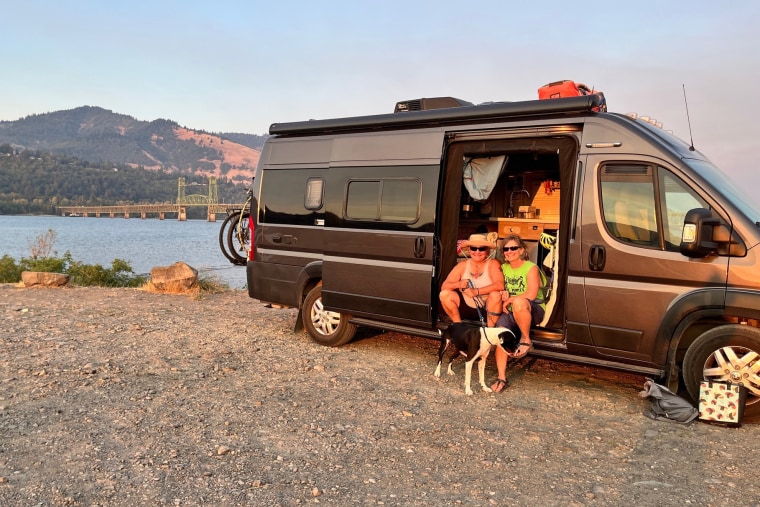
“Good, solid Wi-Fi at the campsite is the No. 1 priority,â€� said Catherine Stifter, 67, citing her wifeâ€
But Stifter needs a good connection, too. The couple lives and travels in their van full time, and when Stifter, a fitness instructor, leads her twice-weekly online qigong practice group, reliable service is a must-have.
When it isnâ€
The Dyrt found 29% of campers worked while camping last year, up from less than 24% in 2022 and 2021, even as more employers mandated a return to in-person work. Some campers may have been “quiet vacationing� — working from a remote destination rather than taking off to fully unplug.
Rout said AccessParksâ€
At least one Montana campground relies on Wi-Fi for a camera system that monitors the area for grizzly bears, Rout added.
Marley Behnke said Wi-Fi was already installed at the campground in Grayling, Michigan, that she bought in late 2022. In addition to letting guests stay connected and share details from their adventures with loved ones, “there are apps that provide real-time updates for activities, facilitate food delivery, organize scavenger hunts and enable interactive games,� she said.
The campground, which is part of the Jellystone Park network, currently pays about $700 a month for Wi-Fi. Behnke said sheâ€
Wiring a campsite for high-speed broadband comes with challenges like ensuring the signal can make its way through uneven terrain, trees and metal RV bodies and withstand extreme weather. Depending on property size and the type of service offered, installation might run anywhere from $50,000 to $500,000, Rout said, though campgrounds can typically recoup the expense by raising prices by little more than $1 a night.
One factor that could be driving demand for Wi-Fi in the wilderness: the influx of newbie and higher-end campers who may prefer a less rustic experience.
Iâ€
Sommer Nyte, 46, Bellingham, Wash.
The share of first-time and less-experienced campers hit 32% this year, down from a peak of 41% in 2022 but far higher than pre-pandemic — when that rate didnâ€
While middle- and lower-income travelers are especially keen to camp this summer, Deloitte researchers say, camping demand is up 7% in a year when high-income travelers comprise a greater share of this seasonâ€
“Iâ€
Internet connectivity isnâ€
However, Hipcampâ€
And then there are those who still go camping to get away from it all.
“There used to be a curtain of isolation between campers and the outside world,â€� said John Stark, a 73-year-old retired broadcaster from Tucson who just returned from camping at Bandelier National Monument in New Mexico — which doesnâ€
“I blame cell towers,� he added.
One way analog campers like Stark can stay offline is to stick to publicly operated campgrounds. While the RV Industry Association found about 60% of private sites offered Wi-Fi as of 2022, only 3% of public ones did.