
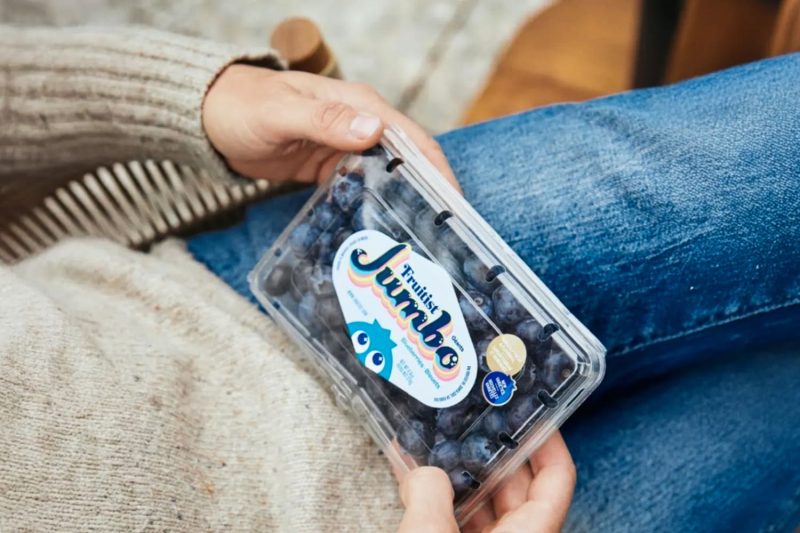
Berry unicorn startup Fruitist has surpassed $400 million in annual sales, thanks to the success of its long-lasting jumbo blueberries.
The company, which was founded in 2012, announced on Tuesday that it is changing its name from Agrovision to Fruitist. It previously only used the name for branding its consumer products, which also include raspberries, blackberries and blueberries.
As sales of its berries grow, Fruitist has raised more than $600 million in venture capital, according to Pitchbook data. Notable backers include the family office of Bridgewater Associates founder Ray Dalio.
Fruitist is reportedly considering going public as soon as this year, even as global trade conflicts hit stocks and raise fears about a global economic slowdown.
The company has tried to set itself apart in a crowded space in part by positioning its berries as “snackable.� The snacking category has been one of the fastest growing in the food industry in recent years.
While many consumers still enjoy potato chips and pretzels, many big food companies have expanded their portfolios in recent years to include healthier options. The adoption of GLP-1 drugs and the “Make America Healthy Again� agenda pushed by Health Secretary Robert F. Kennedy Jr. have made healthier snacking options even more attractive to both consumers and investors.
Today, Fruitistâ€

Co-founder and CEO Steve Magami told CNBC that Fruitist was created to solve the problem of “berry roulette.â€� Thatâ€
“You have a bunch of small growers that send their product to a packer, and the packer sends the product to a distributor or an importer, and then that player is either selling to the retailers or they are sending the product to another distributor to then sell to retailers,� Magami said. “You have this disjointed value chain that stifles quality.�
To sell more berries of higher consistent quality, the company grows its fruit in microclimates, with its own farms in Oregon, Morocco, Egypt and Mexico. It also uses machine learning models to predict the best time to pick the fruit. Fruitist invested heavily in infrastructure, like on-site cold storage to keep the berries fresh before they ship.
The companyâ€
“Iâ€
Larger berries, like the companyâ€
Looking ahead, Fruitist is planning to expand into cherries. The company is growing them now on its Chilean farms and plans to start shipping them next season, which means they could land in grocery stores by early 2026.
Magami said the company has invested more than $600 million to farm berries year-round and build a global footprint that spans North America, Europe, the Middle East and Asia.
To date, Fruitist has spent little of the funding it has raised on marketing, although thatâ€
One push for public recognition could come in the form of an initial public offering.
In January, Bloomberg reported that the company was weighing going public as soon as June. Magami declined to comment on the report to CNBC.
If Fruitist decides to go public, it will enter a public market that has yielded mixed results for new stocks in recent years.
Produce giant Dole returned to the public markets in 2021. Shares of the company have risen 14% over the last year, outpacing the S&P 500′s gains of 2% over the same period. Dole, which reported annual revenue of $8.5 billion last year, has a market value of $1.3 billion.
However, market turmoil caused by the White Houseâ€
Trade tensions present other challenges for a global produce company. President Donald Trump has temporarily lowered new tariff rates on imports from most countries to just 10% until early July, but itâ€
Still, Magami said the company is anticipating “minimal impact� from the duties, noting that it has been investing in U.S. production for years.
“Weâ€
Luckily for Fruitist, the tariff rates are set to rise when domestic berries are in season.
CORRECTION (April 23, 2025, 9:08 a.m. ET): An earlier version of this article misstated Doleâ€