
An exiled Iranian resistance group has uncovered damning evidence showing top regime officials’ direct involvement in supporting the Houthis in their attacks against ships in the Red Sea.
Fox News Digital reviewed evidence provided by The Peopleâ€

The MEK noted several methods and locations that the Iranian Revolutionary Guard Corps-Qods Force (IRGC-QF) uses to ship a variety of weaponry, including drones, cruise missiles, ballistic missiles, anti-ship mines, radar equipment and communication systems, to the Houthis. They noted that some of the missiles in the Houthisâ€
Adding fuel to the group’s claims, a February 2024 Defense Intelligence Agency (DIA) report demonstrates Iranian support to Houthi proxies through side-by-side comparisons of Houthi and Iranian unmanned aerial vehicles and missile systems. Among the ballistic missiles in both countriesâ€
Also included in the Houthisâ€
Following Hamasâ€
The Israel Defense Forces did not respond to a request for comment about how many times the Houthis have attempted to attack Israel since Oct. 7, or whether they have used Iranian weaponry to do so.
Behnam Ben Taleblu, a senior fellow at the Foundation for Defense of Democracies, told Fox News Digital that despite being ‘the newest member of the ‘Axis of Resistance,â€
The Houthisâ€
In its report to Fox News Digital, the MEK provided broad descriptions of the methods the IRGC-QF uses to deliver military material to Yemen. The MEK said the IRGC has ‘exerted pressure on some local barge owners’ to ferry weapons to Houthi boats ’10 miles off the coast of Yemen.’ On other occasions, the MEK reports that Iran may ship materials to Yemen after making ‘stopovers in African countries.’
The report states that Iran sometimes hides weaponry inside fenders, the ‘large shock absorbers that prevent ships from colliding with piers and other obstacles.’ On some occasions, the MEK reported that fenders were anchored below the water surface at a predetermined location, ‘and picked up by a secondary ship using built-in GPS.’
Other times, the fenders were attached to Iranian barges. On Aug. 13, 2019, the MEK said fenders ‘up to six meters long were attached to a ship at Bushehr wharf two days before departure’ to Lavan Island in the Persian Gulf. ‘Military weapons and equipment were concealed inside these fenders,’ the MEK said, but the group had no information about the cargoâ€
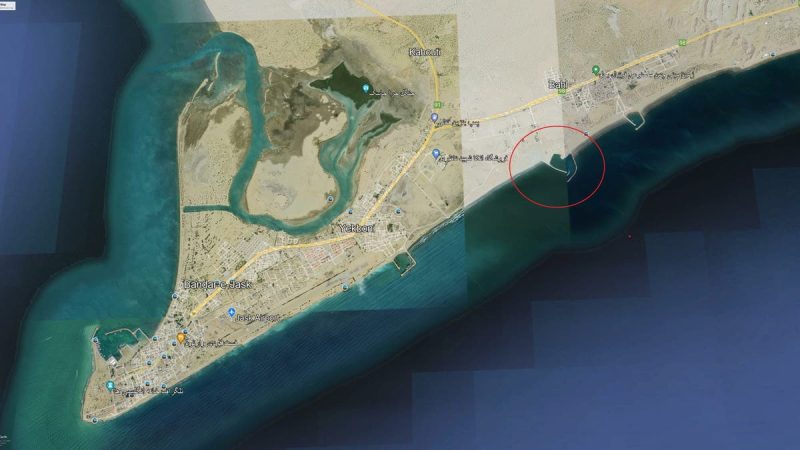
On May 27, 2020, the MEK said Yemenis crewed a barge ‘loaded with light weapons’ from a location two miles from the port city of Jask. They also noted that the Bahman Piers, a set of ‘about 80 or 90’ secretive ports constructed along the Persian Gulf and the coast of the Sea of Oman on the 1982 orders of Iran’s supreme leader, Ayatollah Khomeini, remain ‘outside the monitoring of international organizations.’ The MEK say the Bahman Piers are utilized as a means to smuggle oil and petrochemicals and ship out weapons to proxies, including the Houthis.
In addition to providing weapons to the Houthis, the MEK explained that Iran trains the Houthis to utilize high-tech weaponry, and has ‘helped the Houthis to develop from a ragtag force into a conventional military force’ by training Houthi military personnel.
In a February interview with CBS, CENTCOMâ€
In addition to training, Taleblu also sees signs that Yemen ‘has been a testing ground for Iranian weapons.’ Taleblu cited one case in which the Houthis showcased a medium-range ballistic missile with a unitary conical warhead in Yemen months before the Iranians ‘brought it into their arsenal.’
The difficulty of hindering support to the Houthis is underscored by the echelons of Iranian leadership involved in maintaining Iranian-Houthi relations. According to the MEK, the senior IRGC-QF commander, Brig. Gen. Abdul Reza Shahlai, also known as ‘Haj Yusuf,’ is charged with overseeing coordination with the Houthis. He is assisted by Brig. Gen. Ismail Qaani, Brig. Gen. Mohammad Reza Fallahzadeh, also known as ‘Abu Baqer,’ and Abu Fatemeh.
The MEK also states that a headquarters within the Iranian Foreign Ministry ‘reviews and analyzes the effects of Houthi attacks,’ while IRGC Maj. Gen. Gholam Ali Rashid, commander of the Khatam al-Anbiya command headquarters, is ‘primarily responsible for military affairs in Yemen.’ The MEK also alleges that Iranâ€
Khamenei, Shahlai, Qaani, Fallahzadeh and Rashid have been sanctioned by the U.S. Treasury Departmentâ€
The U.S. Treasury Departmentâ€
No matter how necessary, thwarting Iranian fundraising will prove a difficult endeavor. According to Taleblu, the Islamic Republic of Iran has a well-established system capable of ‘scaling up material support over time.’ Through a combination of direct financial transfers, money laundering schemes, illicit revenue, and a nontraditional system of sending remittances that uses front companies and exchange houses across multiple countries, ‘Iran has the ability to fund terrorism and engage in illicit financial trade across the region while under sanctions.’
Ali Safavi, of the Paris-based NCRIâ€
Iranâ€
Iran can see that ‘the strategy is working,’ Taleblu says, and the world is ‘likely going to see more weapons proliferation across the region, not less.’
THE Associated Press contributed to this report.