
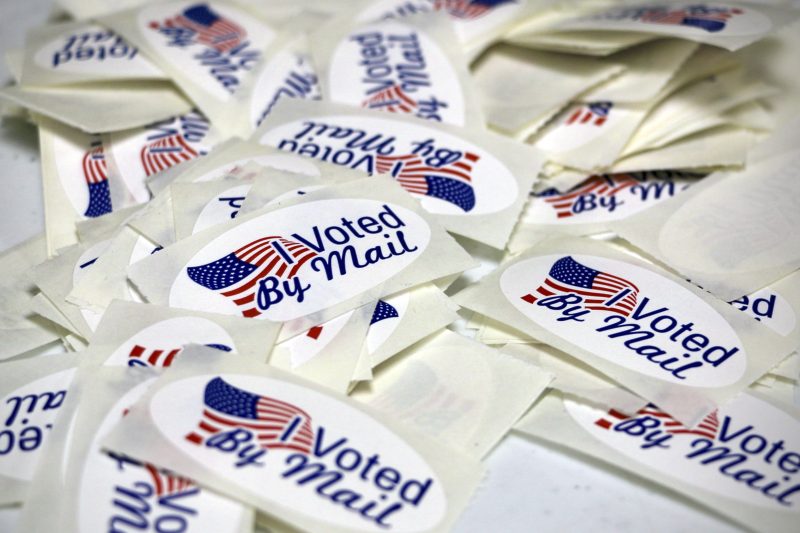
A state appeals panel upended election preparations in North Carolina on Friday, ordering a halt to the distribution of mail ballots in the battleground state after granting Robert F. Kennedy Jr.’s request that his name be removed from contention for the presidency.
Friday was the deadline for local election officials to mail ballots to the roughly 130,000 North Carolinians who had requested them so far. County offices had been preparing for weeks with ballot design, printing orders and envelope preparation.
That effort immediately stopped under instructions from the State Board of Elections following the court ruling, and officials estimated it will take a minimum of two weeks and more than $1 million — borne by cash-strapped county offices — to design, print and prepare new ballots.
An anonymous three-judge panel of the North Carolina State Court of Appeals offered no explanation for its decision but appeared to side with Kennedyâ€

Kennedy suspended his campaign last month and asked that his name be removed from ballots in 10 battleground states to avoid siphoning votes from Republican nominee Donald Trump, whom he endorsed. In a decision also published Friday, the Michigan Court of Appeals ruled in favor of Kennedyâ€
The North Carolina decision set off a scramble in a key swing state with razor-thin margins in recent presidential races. In the previous two contests, Trump won the state with less than 50 percent of the vote, and in 2020 his margin was less than 75,000 votes — far less than the number of mail ballots requested so far this year. Democrats are significantly more likely than Republicans to vote by mail.
“We had all of our ballots stuffed and prepped and ready to go out today,â€� said Sara LaVere, director of the Brunswick County Board of Elections, at the southern tip of the state. “Weâ€
Brunswick County must redesign 29 ballot styles to account for district boundaries in state and local elections.
“Weâ€
As of Wednesday, more than 2,910,000 general election ballots had been printed statewide, including ballots for both absentee and in-person voting, according to the stateâ€
J. Michael Bitzer, a political scientist at North Carolinaâ€
“This is where partisanship and legal principles really collide,â€� Bitzer said. “If youâ€
In its pleading to keep Kennedy on the ballot, the state argued that Kennedy not seeking to remove his name everywhere mitigated his right to do so in North Carolina, particularly given the adverse impact on election officials.
“All of these staff members, along with staff from all 100 county boards, work long hours for multiple weeks, including many working overtime and weekends,� the pleading stated.
Officials said they plan to appeal in Michigan and North Carolina. In Michigan, the decision could affect what is expected to be a close race between Trump and Vice President Kamala Harris. Friday was the deadline for making ballot changes, but they were not yet being mailed out, so the effect on ballot production is not expected to be as disruptive as in North Carolina.
In an email to county election officials sent late Friday, North Carolina State Board of Elections Executive Director Karen Brinson Bell said counties should proceed with complying with Fridayâ€
Friday was both the deadline for mailing absentee ballots and the deadline for a candidate to withdraw their name from the ballot. Kennedyâ€
“It is undisputed that Kennedy submitted formal written requests for his withdrawal prior to any applicable statutory deadline,� his lawyers wrote.
Complicating the new timeline is the looming federal deadline, Sept. 21, to send out overseas and military ballots. Bell said in her email that the state may have to ask the federal Election Assistance Commission for a waiver. But if counties are late sending out those overseas ballots, voters will have less time to return them. Unlike state absentee ballots, federally regulated overseas ballots may be submitted electronically.
“Itâ€
Patrick Marley in Madison, Wisc., contributed to this report.