

PHOENIX — Arizonaâ€
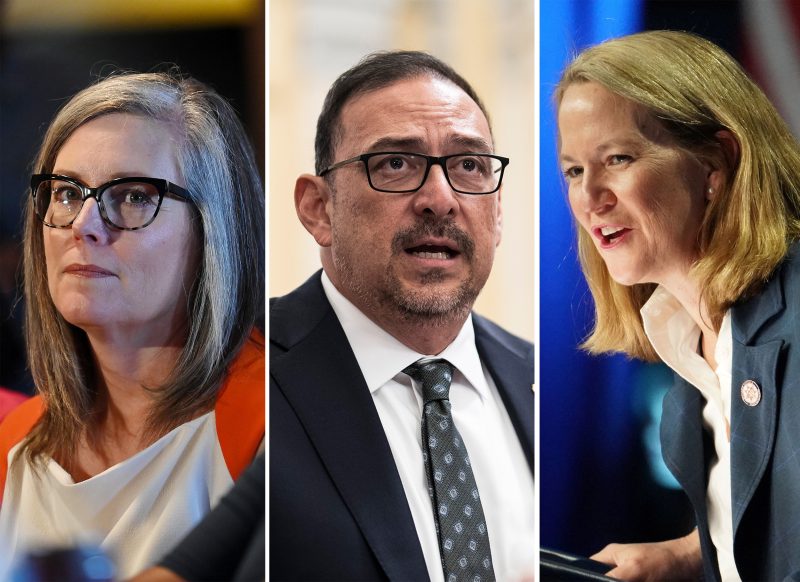
Their predicament was “an urgent, a dire situation,� Gov. Katie Hobbs said, according to audio of the call obtained by The Washington Post. Secretary of State Adrian Fontes said critics would “beat us up no matter what the hell we do.� Attorney General Kris Mayes worried they would be accused of rigging the 2024 election in a crucial state.
Changing the voting status of these Arizonans risked disenfranchising legitimate voters six weeks before the election. Letting them vote as they had in the past could violate the law. Even though the problem predated these officials by 20 years, it was on them to fix. And though it affected only state and local races, not the presidential or Senate elections, they knew after four years of attacks on the stateâ€
“When this goes public, it is going to have all of the conspiracy theorists in the globe — in the world — coming back to re-litigate the past three elections, at least in Arizona,â€� Hobbs said. “And itâ€
During the 40-minute call on Sept. 10, the three bluntly took stock of the scope of the problem. They believed it affected about 148,000 voters, but later lowered the estimate to about 98,000. They knew the voting rights of Republicans, Democrats and independents were affected and they saw how the issue could erode confidence in state elections. The voters skewed Republican, and nearly all of them appeared to be citizens, but the group recognized the situation was politically explosive given that Republicans across the nation were already falsely claiming that massive numbers of noncitizens illegally vote for Democrats.
The governor suggested that these voters should be given ballots containing only federal races because of a state law that bars voters from casting ballots in state and local races if they have not provided proof of citizenship. But Fontes and Mayes argued that the state could not disenfranchise voters in any race so close to the election. They said requiring all of these voters to provide U.S. birth certificates or other documents in the coming weeks would create a logistical crisis for voters and election officials who were already stretched thin.
“Think about all of the 82-year-olds in wheelchairs who are not going to be able to make it to the polls and sure as hell arenâ€
Fontes, who led most of the conversation, summed up their conundrum: “Theyâ€
A spokesperson for Fontes on Saturday emphasized that voting by noncitizens is “vanishingly rare,â€� despite claims from interest groups and figures aligned with former president Donald Trump. Mayes declined to comment. And the governorâ€
The candid and sometimes tense conversation provides a rare look at the precarious situation that officials in battleground states often find themselves in. They donâ€
The Democratic trio has firsthand experience with the mechanics of elections in the state — and the wrath of those who donâ€
At the time, Hobbs was the secretary of state and faced death threats as she defended the legitimacy of the outcome. Fontes was the recorder for the stateâ€
All three were elected during the 2022 midterms after campaigning on the pledge to protect democracy and beating out Trump-backed Republicans who had made rafts of false claims about elections in the state and the people who run them. Hobbsâ€
Their call this month brought them together for the first time since they each took office in January 2023, according to staff for two of the officials. During the conversation, which included staff, they weighed options and had different ideas on how to try to limit the damage to the publicâ€
Fontes kicked off the call by explaining an obscure problem that had gone unaddressed for 20 years. In 2004, Arizona passed a law requiring voters to provide proof of citizenship to vote. After nearly a decade of litigation, the Supreme Court in 2013 ruled a federal law prevented the state from requiring proof of citizenship to vote for president and other federal offices.
To comply, the state adopted a unique, dual-registration system. Those who provide citizenship documents receive full ballots that include local, state and federal races. Those who do not receive ballots with only races for federal offices.
This month, Maricopa County officials discovered a longtime legal resident who is not a citizen had been improperly shown in electronic systems as having provided citizenship documents. He had not voted, but his appearance on the voter rolls sent election officials scrambling for answers. Fontesâ€
Now the three Democrats discussed what to do. State law didnâ€
Hobbs noted “conspiracy theorists� could run wild with the situation and said they needed to be “as proactive as possible to look like we are taking every single action possible to shore up the confidence in our voting system.�
“If I was in your shoes, secretary, I would take those 148,000 voters and move them to fed-only and do everything I could to provide the resources for the counties to deal with that additional burden and to ensure the confidence in the system,â€� said Hobbs. “Iâ€
Mayes rebuffed that idea, noting the list included more Republicans than Democrats.
“If we do what youâ€
Fontes sided with Mayes, saying, “I have no intention of notifying 148,000 voters at this stage of the game that they have to scramble around when the state of Arizona has been providing them full ballots all this time.�
He said he could easily explain his stance. Not allowing this group of voters to automatically vote in all races could help Democrats, he noted, but “weâ€
Later on the call, Hobbs flinched at discussing how many Republicans and Democrats were on the list. “I just think that cannot be part of the conversation because then weâ€
Fontes said it would be “an absolute s— show at the counties if we tell them they need to go chase down 150,000â€� voters to verify citizenship given the many demands on their offices. “I loathe to shove this down their throats at this stage of the game,â€� he said.
Mayes said it would be unfair — and possibly illegal — if they unilaterally determined that the residents could not vote in state races and a ballot measure to ensure access to abortion.
“Can you imagine telling 67,000 Republicans they canâ€
Responded Hobbs: “Theyâ€
Fontes reiterated that he wanted voters to receive full ballots, and Hobbs shifted her stance to back him
“I hear you,â€� the governor said. “I agree with you. Itâ€
But, she noted, they would face a wave of criticism. “Itâ€
Fontes argued that no matter what they say or do, Republicans are “going to beat us up.�
Hobbs had suggested that the issue would be best solved with a court decision. “That would provide that cover, that legal cover,â€� the governor said. She suggested that the litigation should come “from someone whoâ€
That notion within days evolved into what Fontes called a “friendly lawsuit� that Maricopa County Recorder Stephen Richer (R) brought against the secretary of state. Richer, like the three Democrats, has faced years of threats and harassment for doing his job. He lost his July primary election to another Republican and had shown a willingness to take bold political stands.
Fontes and Richer asked the state Supreme Court to quickly give them an answer. Around the same time, Hobbs announced the computer issues at the division of motor vehicles that caused the problem had been quickly fixed. Soon after, the court issued a ruling that said the votersâ€
In the litigation, the Democratic leaders found allies among Republicans who recognized that their party had the most to lose because so many of their voters were on the list. The state Republican Party sided with Fontes in asking the stateâ€
But others pounced on the problem, just as Fontes and the others predicted. Laura Loomer, a far-right backer of Trump, on social media alleged the state “may have just illegally registered 100,000 illegal aliens to vote!�
The post ricocheted around social media, setting off the kind of viral messaging that Hobbs, Fontes and Mayes had feared.
Marley reported from Madison, Wis.