
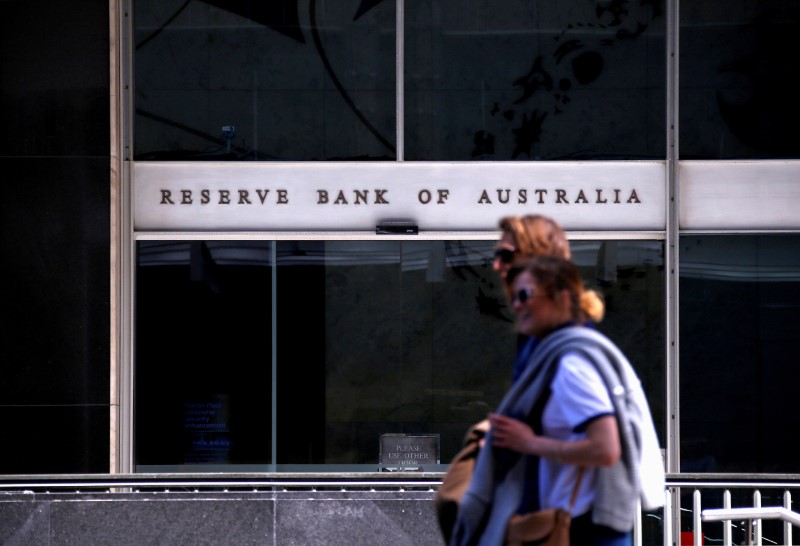
Investing.com– The Reserve Bank of Australia is widely expected to keep interest rates unchanged in September, although sticky inflation and a strong labor market are likely to elicit a hawkish outlook from the central bank.
The RBA is expected to leave its cash target rate unchanged at 4.35%, a Reuters poll showed.
But the central bank is likely to signal that interest rates will remain high for longer, or could even possibly rise further after inflation remained high in the second quarter.
While consumer price index inflation has steadily declined in recent months, it has done so at a slightly slower pace than forecast by the RBA. Core inflation has also remained well above the RBAâ€

Members of the RBAâ€
Governor Michele Bullock has also repeatedly warned this year that sticky inflation could invite more rate hikes from the central bank.
While prices of goods have eased, service price inflation has remained sticky, especially amid a strong labor market. Service price inflation has also been a main point of contention for the RBA.
Australiaâ€
While the RBA is still expected to not have enough impetus to hike rates, it is likely to keep rates higher for longer and delay any potential plans to begin cutting rates.
“We continue to expect the RBA to start its easing cycle in February 2025. But the risks look to have tilted to a later rather than an earlier start, particularly given the current momentum in the labour market,� ANZ analysts wrote in a recent note.
ANZ expects RBA members to consider a hike during its September meeting, but to eventually settle on a hold.
The RBAâ€
Most notably, the Federal Reserve had last week cut rates by 50 basis points and flagged the beginning of an easing cycle that is expected to bring rates substantially lower.
How will the ASX 200 react?
Australian stocks had benefited greatly from dovish signals from the Fed, as the prospect of lower interest rates saw investors pivot into economically sensitive sectors. This put the ASX 200 at record highs last week.
But local stocks remained vulnerable to profit-taking, with overly hawkish signals from the RBA likely to spark a near-term pullback in markets.
Australiaâ€
How will AUDUSD react?
The Australian dollar benefited from a hawkish RBA and a dovish Fed, with the AUDUSD pair recently hitting a near nine-month high.
Any more hawkish signals from the RBA are likely to further boost the currency.