

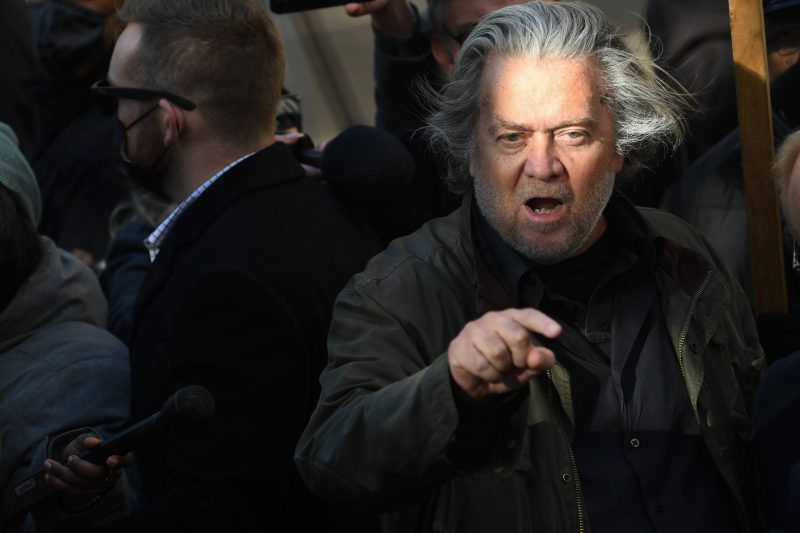
The Supreme Court on Friday turned aside Stephen K. Bannonâ€
The high courtâ€
Bannon had asked the justices for an emergency stay on June 21, after his D.C.-based trial judge and the judges who heard the appeal of his conviction rejected similar requests. Both courts said Bannon had little chance of success in arguing that he was relying on advice from an attorney and did not “willfully� break the law by ignoring the congressional subpoena.
David I. Schoen, an attorney who represented Bannon through his trial and sentencing, said Friday: “I fully believe the conviction will be reversed and it is a shame to see it mishandled like this. He never should be going to jail for even a day.�
Bannonâ€
Solicitor General Elizabeth B. Prelogar wrote that Bannon did not qualify for an “extraordinary� exception from the law, arguing to the Supreme Court, “He cannot make the demanding showing necessary to override the normal requirement that a convicted defendant begin serving his sentence.�
The courtâ€
Both men argued that they could not testify to the House committee investigating the Jan. 6, 2021, Capitol attack because they were covered by executive privilege, the constitutional principle under the separation-of-powers that shields the communications of presidentsâ€
But judges ruled that unlike two other top Trump aides whom the Justice Department declined to charge for failing to appear before the committee — former White House chief of staff Mark Meadows and communications chief Dan Scavino — neither Bannon nor Navarro received letters from a lawyer for the former president directing them not to respond to subpoenas from the committee, specifically citing the privilege.
To the contrary, although Trump suggested before Bannonâ€
The Trump White House attorney wrote, “we donâ€
Bannon has maintained a high political profile, advising Trump and others in the 2024 campaign and speaking on his “War Roomâ€� podcast. The former chief strategist of Trumpâ€
He faces other legal challenges. A New York state judge last summer ordered him to pay nearly $500,000 in legal fees to lawyers representing him in connection with a number of matters, including a criminal case alleging he defrauded donors contributing to a private effort to build a wall on the U.S.-Mexico border. Trump had pardoned Bannon in connection with those allegations.