

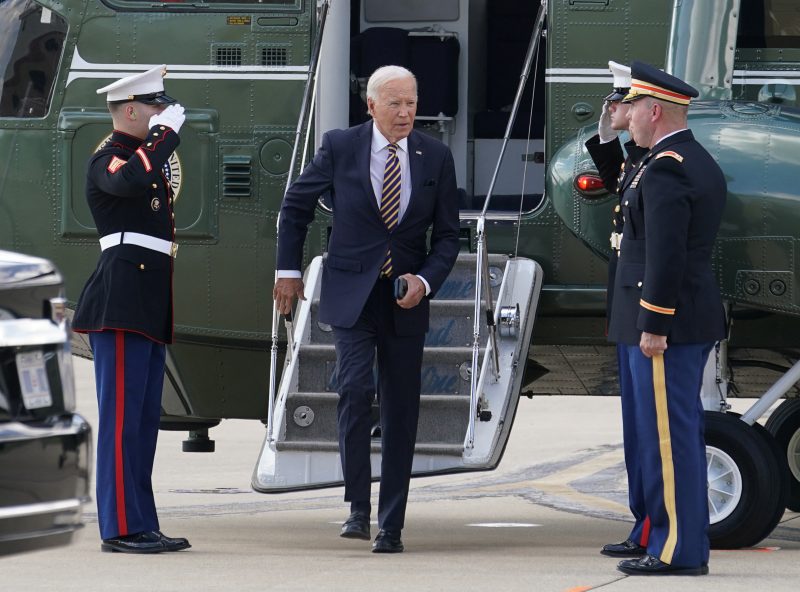
President Joe Biden will head to the United Nations General Assembly on Monday, seeking to cement his foreign policy legacy amid the growing threat of war between Israel and Hezbollah and questions about his administrationâ€
The annual gathering, which brings together world leaders in New York, will mark one of Bidenâ€
“Joe Biden, more than most presidents, has a history of foreign policy activity and accomplishments and Iâ€
“UNGA could become an all-Lebanon UNGA, which is not what the administration wants,â€� Riedel added. “This is a crisis Iâ€
Biden is likely to emphasize his work rebuilding alliances and leading the Western coalition to aid Ukraine in the aftermath of Russiaâ€
Vice President Kamala Harris is not scheduled to attend the high-level gathering in New York but is expected to hold meetings in Washington, including with United Arab Emirates President Mohamed bin Zayed al-Nahyan on Monday and Ukrainian President Volodymyr Zelensky on Thursday, according to the White House. Both Biden and Harris will meet with the leaders at the White House, but Harris will also meet separately with both men.
“Everyone understands this election is really, really close. Itâ€
While in New York, Biden will meet with U.N. Secretary General António Guterres and host a summit of the Global Coalition to Address Synthetic Drug Threats, an effort the United States launched last year, White House spokesman John Kirby told reporters last week. But perhaps more notable, analysts and experts said, are the unofficial discussions.
“There are essentially two UNGAs. Thereâ€
It has now been nearly a year since Hamas militants stormed through the Israel-Gaza border fence and killed about 1,200 people, many of them civilians, and took about 250 hostage. In the aftermath of that attack, Israel launched a brutal operation in Gaza that has killed more than 41,000 Palestinians, according to the Gaza Health Ministry, and fueled an ongoing humanitarian catastrophe.
Bidenâ€
Asked on Friday whether a cease-fire deal was realistic, Biden said, “A lot of things donâ€
Allies and experts have lamented that the administration does not appear to have a Plan B to calm tensions in the Middle East outside of the cease-fire efforts. Hezbollah has vowed to continue firing rockets into Israel as long as the war in Gaza continues, dimming hopes that a diplomatic deal is on the horizon.
An Israeli operation last week detonated pagers and walkie-talkies used by the militant group, killing at least 37 people and injuring thousands. Hezbollah leader Hasan Nasrallah vowed retaliation, and Israel on Friday launched what it said was a targeted strike in Beirut against a Hezbollah leader that killed at least 51 people as of Sunday and destroyed two buildings, according to Lebanese officials, amid some of the most intense Israeli cross-border bombardments since the war in Gaza began.
U.S. officials stressed that they were not involved in the Israeli operation detonating electronic devices and said they were only briefed about it afterward. They have continued to call for calm and said they are still working to secure a cease-fire and diplomatic solution.
But the Israeli operation last week, coupled with the suggestion from top Israeli officials that the focus may shift to Lebanon, appeared to undermine months-long U.S. efforts to end the bloodshed in the region. Biden and his top aides have given no indication that they are looking at a change in policy or withholding weapons to Israel, frustrating Arab allies and prompting criticism from other nations, including those in the Global South.
In a potential sign that U.S. officials believe there is little they can do to convince Israel to change course, some top officials, including Secretary of State Antony Blinken and Defense Secretary Lloyd Austin, opted not to travel to Israel last week to try to calm tensions.
“Their No. 1 goal has to been to prevent an escalation, and here the Israelis go do it again and make it that much more likely itâ€