
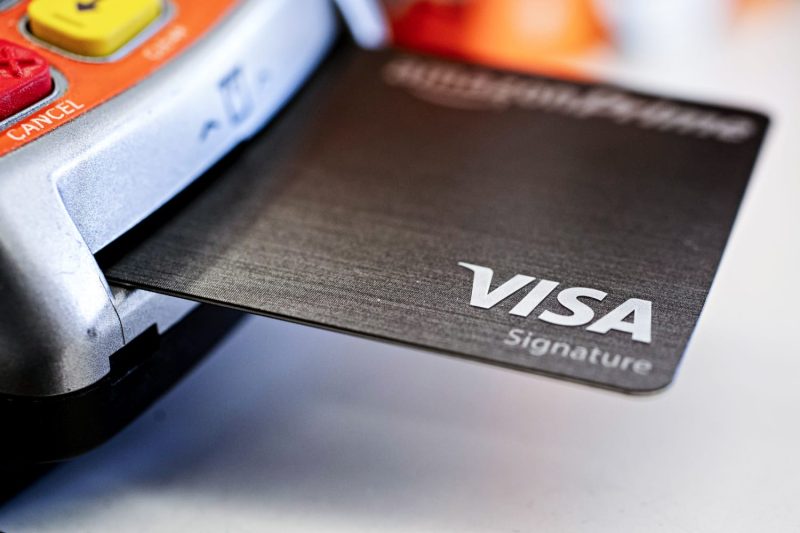
Many small businesses are breathing a bit easier as inflation has cooled and the race for workers slows. But consumersâ€

Gene-Christian Baca, the owner of Walterâ€
“Every year, 3% of all of our sales is washed away just to credit card processing,� he said.
Merchants have long shouldered these “swipe fees,â€� the catchall term for businessesâ€
And as many shoppers ditched cash for plastic cards or mobile payment apps, businesses have seen credit card transactions swell. They made up 32% of all U.S. consumer payments in 2023, up from 24% in 2019, according to a Federal Reserve study. Cash shrunk its share to 16% over the same period, down from 26%.
Spending on American Express, Discover, Mastercard and Visa cards in the U.S. soared to $5.25 trillion in the first half of 2024, up from around $4.98 trillion during the same period in 2023, according to data provided to NBC News by the Nilson Report, which covers the payments industry.
These shifts in customer habits have added to many businessesâ€
Some of Visaâ€
“Most likely, higher swipe fees from Visa would mean higher prices for people at the store eventually,â€� said Matt Schulz, chief credit analyst at LendingTree. “Itâ€
The Merchants Payments Coalition, an advocacy organization backed by leading restaurant, retail and other trade groups, estimates Visaâ€
“That seems like not a lot, but it increases the amount of every single transaction, and that really adds up over time,â€� said Doug Kantor, a member of the Merchants Payments Coalitionâ€
The Merchants Payments Coalition says the $172 billion in swipe fees in 2023 set a record and estimates they cost the average family more than $1,100. The group is pushing for more transparency with credit card fees, more competition among networks and lower fees.
Visa says its changes are meant to make the network better. When confronted by policymakers about some of its swipe fees, the company has said that it “has no incentive to set [them] at levels that are too high or too low.�
A Visa spokesperson told NBC News in a statement: “We are constantly enhancing our network to better serve the businesses and consumers that increasingly choose to transact with us. Everything we do is designed to make paying and being paid with Visa more convenient, secure and reliable.�
The Electronic Payments Coalition, an advocacy group supporting card networks including Visa, says average swipe fees havenâ€
Businesses handle swipe fees differently. Some, like Walterâ€
“Itâ€
He said the deli introduced the convenience fee within the last couple of years as it faced mounting pressure from taxes, wages and other expenses.
“At the end of the month, by the time you bring home any type of money, 10 other people have already had their hands in it,� Burns said. “Even just a little bit like on the credit cards, 3, 4% goes a long way helping small businesses stay afloat.�
Consumer experts recommend using cash for small transactions, using rewards cards to make the most of each purchase and paying in person rather than over the phone when possible. Phone transactions often result in a higher fee for businesses due to security risks.
The fight over swipe fees has reached Congress. The Credit Card Competition Act, a bipartisan bill spearheaded by Sens. Dick Durbin, D-Ill., and Roger Marshall, R-Kan., aims to boost competition among credit card processing companies — something the Merchants Payments Coalition says is essential.
But the bill has stalled. Several groups supporting banks, credit card networks and credit unions are opposing the measure, saying it would harm small businesses and consumers, in part by limiting rewards.
“Swipe fees are definitely a really contentious thing and have been a battlefield between credit card issuers and networks and merchants for a long time,â€� said LendingTreeâ€