
What retail apocalypse?
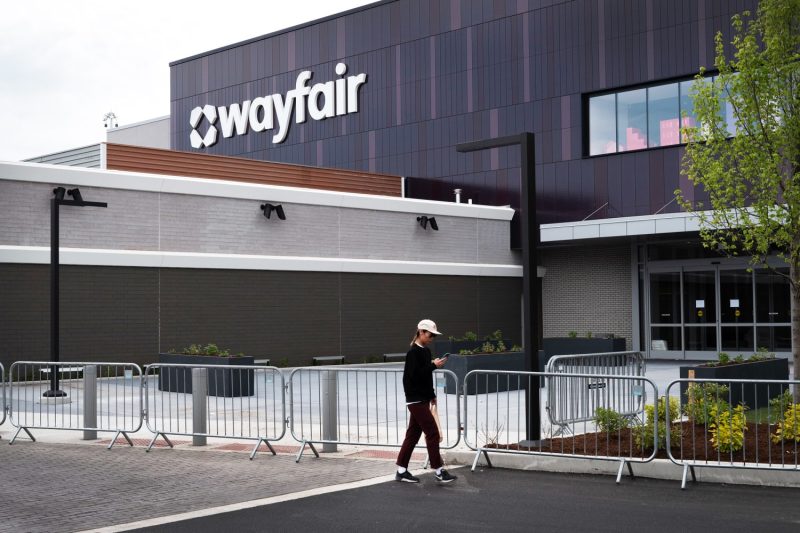
Online home goods retailer Wayfair is opening its first namesake store, near Chicago, following a string of other digitally native companies that have turned to brick-and-mortar for growth.
In an ironic twist for a company that became a $12 billion powerhouse by persuading consumers to buy couches and beds online, Wayfair is leaning into the most basic building blocks of retail. Thatâ€

“If you think about the categories weâ€
“Depending on what purchase someoneâ€
The 150,000-square-foot megastore in Wilmette, Illinois, is set to open May 23. Wayfair follows other direct-to-consumer brands that have opened stores, including Warby Parker, Figs, Casper, Glossier and Everlane.
Wayfairâ€
Privacy changes on Meta and Apple iOS have made it more difficult for marketers to target customers in advertising campaigns. Companies also face more competition from Chinese-linked upstarts such as Shein and Temu.
Returns and the scams that come along with them are a never-ending, money-losing game. With the proliferation of online marketplaces on Amazon, Walmart and Target, just about anyone can be a retailer — and brands can find themselves competing against their own manufacturers.
Many companies that started by selling directly to consumers now offer their wares in department stores and big-box retailers, but even that brings pitfalls. Brands that earned their competitive edge by gathering enormous amounts of data on their customers donâ€
Theyâ€
Plus, torrid e-commerce growth during the Covid-19 pandemic has moderated and fallen to below its pre-pandemic low, U.S. Census data shows. Given the seemingly inextricable role online shopping plays in most Americansâ€
“For some of my companies in our various experiences, [stores] can be your very best channel from an economics perspective — if you have a really good brand,â€� said Larry Cheng, a founding partner at Volition Capital, a technology growth equity fund that invests in software, internet and consumer companies. “Itâ€
Wayfairâ€
“Youâ€
“Youâ€
ng just one large-format store to complement a handful of smaller shops it opened under its specialty retail brands All Modern and Joss & Main.
In the future, Shah is envisioning a “whole portfolio of large-format stores� with a nationwide footprint.
Wayfairâ€
In the early 2010s, new store openings largely outpaced closures, until the tide turned in 2017. Nearly 8,000 retail storefronts were shuttered and only about 5,000 new ones opened that year, according to Coresight Researchâ€
The spike in store closures sparked headlines about the so-called retail apocalypse and warnings that stores would die off as shopping moved online.
For a while, that seemed to be true. New store closures outpaced openings until the trend changed in 2022. For the first time in five years, more storefronts opened than closed, resulting in 1,575 net new openings. There were 307 net new openings in 2023, and there have already been 521 net new openings in 2024, as of May 10.
Discount retailers such as Dollar General, Five Below, Burlington and TJX Companies have fueled a lot of that growth, said John Mercer, Coresightâ€
Take Warby Parker, the glasses company credited with starting the direct-to-consumer movement. In May 2023, the retailer said it believed it could open more than 900 stores in the U.S. It opened about 40 in 2023, and has 40 more planned in 2024. The new store openings contributed to a 12% jump in revenue in 2023 compared with 2022.
Figs, which sells scrubs and other products for health-care professionals, sold its products exclusively online until it opened its first store in Los Angeles in November. It has another planned in Philadelphia for this summer. CEO Trina Spear told analysts during the companyâ€
“And this is in our most penetrated market of Los Angeles. So, thatâ€
Other privately held direct-to-consumer brands have also expanded into retail stores, including bedding company Brooklinen, furniture store Burrow and apparel brands Everlane and Untuckit.
“Pure plays on [e-commerce] are saying, ‘Weâ€
“I donâ€
If direct-to-consumer brands could all open stores and suddenly boost sales and profitability, theyâ€
Expanding into physical retail is challenging and expensive.
Companies looking to open stores need to figure out a physical location, along with furnishings and supplies, and the logistics, such as transporting inventory, said Amish Tolia, the co-founder and CEO of Leap, a start-up that helps brands open retail stores. They also need to determine how to drive foot traffic and operate a store, he said.
All those components require “time, energy, budget and resources, right? And so for as long as we can remember, besides a multi-brand department store, if you want to go set up your own fully branded retail environment, the barriers to entry have always been incredibly high,� Tolia said.
Some direct-to-consumer brands have already been burned after they expanded too quickly and demand fell.
Allbirds, whose market cap has gone from $4.1 billion following its initial public offering to about $114 million, rapidly opened dozens of stores over the last few years, bringing its total count to about 60, as of the end of March. But the shoe and apparel seller now plans to close 10 to 15 “underperformingâ€� locations in the U.S. in 2024 so it can focus on “maximizing the productivity of our remaining stores,â€� executives said during the companyâ€
Mattress brand Purple has also opened about 60 stores, but it said during the ICR consumer investor conference in January that its showrooms are perhaps “the toughest part of our model right now� because about a third of its locations “are problematic for one reason or another.�
“So, weâ€
Wayfair, which hasnâ€
The company spent about $348 million on capital expenditures in 2023 but has also slashed costs to save hundreds of millions of dollars and strengthen its cash position.
Wayfair said itâ€
“The challenge with it is the capital expenditure upfront,� said Cheng, from Volition Capital.
“But ultimately, all of these brands, thereâ€