

Tehran will face “severe consequences� for its large-scale missile attack on Israel Tuesday, the White House said, after the United States employed military force to help defend its closest Middle Eastern ally from Iranian fire for the second time in five months.
National security adviser Jake Sullivan said the barrage of nearly 200 ballistic missiles fired at Israel late Tuesday, only the second time Iran has launched a direct attack on the Jewish state, represented a “significant escalation.â€� He said President Joe Biden was closely tracking the developments, as spiraling violence threatens to undermine one of the U.S. leaderâ€
“We are now going to look at what the appropriate next steps are to secure, first and foremost, American interests, and then to promote stability to the maximum extent possible as we go forward,� Sullivan told reporters at the White House. Officials said the attack had been largely ineffective, with one civilian death reported as initial assessments were made.
He declined to say what form the promised repercussions on Iran, already the object of extensive American sanctions, would take. “We have made clear that there will be consequences, severe consequences,� he said. “We will work with Israel to make that the case.�
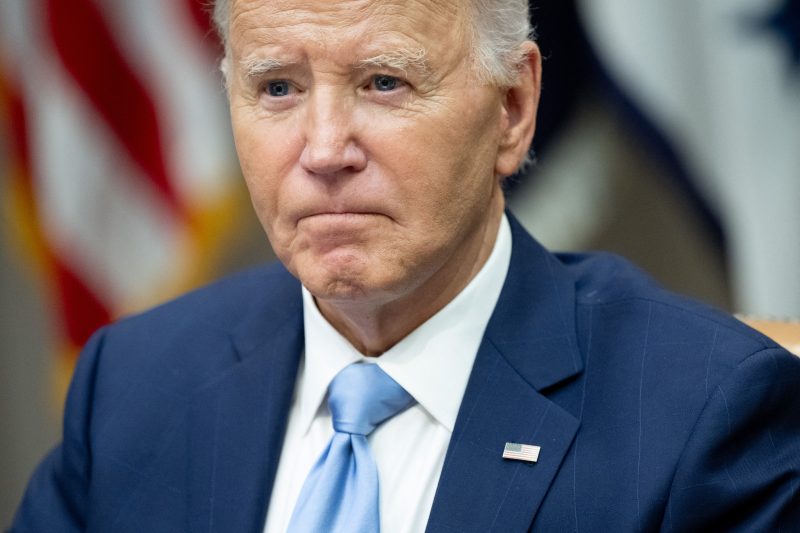
Biden, speaking briefly to reporters, said the outcome of Iranâ€
“Make no mistake,� he said. “The United States is fully, fully, fully supportive of Israel.�
The president spoke shortly after American destroyers in the eastern Mediterranean Sea shot down multiple missiles launched by Iran, according to U.S. defense officials who spoke on the condition of anonymity to discuss the operation. Pentagon press secretary Maj. Gen. Pat Ryder told reporters after the attack that two U.S. warships, the USS Bulkeley and USS Cole, fired about a dozen interceptors at inbound ballistic missiles, but said officials were still assessing how many of those struck a target. The comments suggested that Israel, with its extensive air defense network, shot down most of the incoming munitions on its own.
“Israel, with the active support of the United States and other partners, effectively defeated this attack,â€� said Secretary of State Antony Blinken. “We demonstrated, once again, our commitment to Israelâ€
Vice President Kamala Harris, the Democratic nominee in Novemberâ€
Former president Donald Trump, the Republican nominee, said Biden and Harris were “leading us to the brink of World War III.â€� Speaking at a campaign event, he said their policies were to blame for current situation because “the so-called enemy doesnâ€
The incident echoes the events of April, when Iran launched a major missile and drone assault in retaliation for an Israeli strike that killed a senior Iranian military official in Syria. The assault was an ominous milestone for Israel, already engaged in a punishing war against Iranian-backed Hamas militants in the Gaza Strip and what until recent days had been a more limited conflict with Iranian-backed militant group Hezbollah in Lebanon.
This time, the exchange is overshadowed by a deepening engagement in Lebanon, where Israel has launched a series of major airstrikes over the last week and is now conducting ground operations against Hezbollah. The unfolding Israeli campaign, which aims to set conditions for allowing displaced Israelis to return to their homes in northern Israel, abruptly curtailed hopes for a near-term cease-fire between Israel and Hezbollah, Iranâ€
The situation underscores the Biden administrationâ€
Over the last year, the Biden administration has repeatedly cautioned the government of Prime Minister Benjamin Netanyahu in the wake of deflected attacks by adversaries, including Iran, to “take the win� and avoid fueling further escalation by conducting a major counterstrike. It is likely to do so again in this instance.
U.S. officials say they are committed to defending Israel when the country faces external attacks but does not intend to conduct offensive operations in Lebanon or other countries.
U.S. officials said that they detected signs of an imminent Iranian attack in the hours before it was launched Tuesday, but there was no direct or indirect warning from Iranâ€
During Iranâ€
The United Statesâ€
U.S. officials, speaking on the condition of anonymity to discuss sensitive assessments, said they continue to believe that Iran does not want a broader war with Israel — one that it probably cannot win — even after Tuesdayâ€
Iranâ€
State Department spokesman Matthew Miller said the Biden administration would continue to work to stave off such a conflict.
“There have been a number of times in the past 12 months where it looked like we might reach such a conflagration,� he told reporters, referring to the war kicked off by the Hamas-led attack into Israel on Oct. 7, 2023.
Iranâ€
Shane Harris and Abigail Hauslohner contributed to this report.