

Why are President Donald Trump and his national security team focused on Panama and Greenland?
Donald Trump understands that modern threats – Chinaâ€

The Monroe Doctrine, Americaâ€
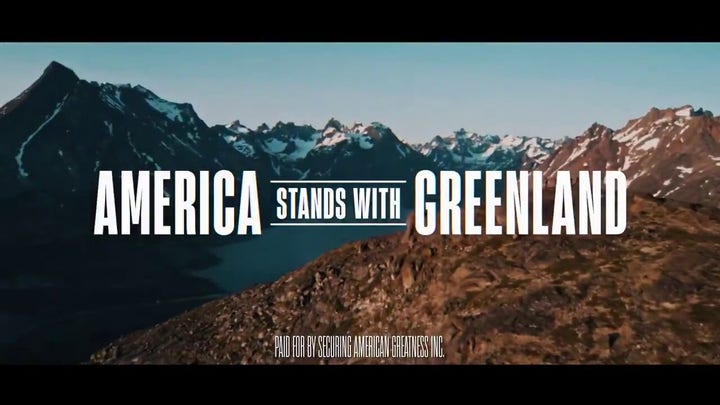
Trump understands that Greenland and Panama arenâ€
During WWII and the Cold War, prior to the advent of near-global real-time overhead satellite coverage, America maintained forward bases in a string from Hawaii to Alaska to Canada to Greenland to Puerto Rico to Panama. These bases hosted naval assets, electronic listening posts, early warning radars and airfields for patrol aircraft.
The forward presence not only protected the American heartland, but it also served to guard the sea lanes needed for trade and to support our allies in Europe and Asia.
Trump recognizes the shifting geopolitical landscape, with Chinaâ€

Similarly, Trump and Secretary of Defense Pete Hegseth are taking significant steps to secure the Panama Canal – with full cooperation from the Panamanian government.
The Panama Canal is a vital artery for global trade and military logistics. But in 1997, just before Britain handed over Hong Kong to China, Hutchison Whampoa, a Hong Kong-based shipping and logistics firm, bought the concession that privatized operations of the Panama Canal.
When, in 2020, China ended the ‘one country, two systems’ model with Hong Kong, it meant for all intents and purposes that Hutchison Whampoa (now known as CK Hutchison) must do the Chinese Communist Partyâ€
Just to be sure, the Trump White House directed the U.S. military to develop options for increasing troop presence in Panama to ensure ‘unfettered’ access to the canal, reflecting concerns about ongoing Chinese threats to the canalâ€
Strategic Importance in a Conflict with China
The strategic importance of Greenland and Panama is heightened in the context of a potential conflict with China, particularly if Americaâ€
If these assets are compromised, the U.S. would need to rely on traditional methods, such as long-range patrol aircraft and naval vessels, operating from forward bases. Greenland, with its airfields and ports, provides an ideal location for staging operations in the Arctic, deploying assets like the P-8 Poseidon to monitor submarine activity and secure shipping routes.
The Panama Canal, meanwhile, ensures rapid deployment of naval forces between the Atlantic and Pacific Oceans, maintaining flexibility in military operations.
This focus on forward bases aligns with the need to defend the homeland and secure vital shipping lanes critical for global trade and military logistics despite enemy efforts. Chinaâ€
Historical Parallels: WWII and Cold War Operations
Historical precedents underscore the importance of forward bases in national defense. During WWII, the U.S. established the Caribbean Defense Command – forerunner to todayâ€
During the Cold War, the U.S. maintained a significant military presence in Latin America to counter Soviet influence. Today, in Cuba, whatâ€
The Broader Challenge
Beyond Greenland and Panama, Chinaâ€