
























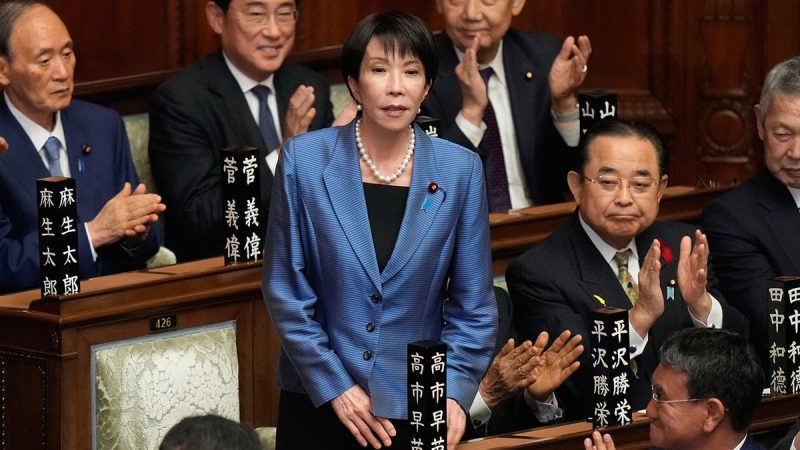
Japanese Prime Minister Sanae Takaichi plans to dissolve Parliament’s powerful lower house as early as this month, setting up a snap election aimed at securing voter backing for her agenda while her approval ratings remain high, a senior party official said.
The Associated Press reported that the move would allow Takaichi to seek fresh support for her economic and security priorities at a time when her scandal-tainted party and a new coalition partner hold only a slim majority in Japan’s legislature.
Takaichi made history in October when she was elected as Japan’s first female prime minister.
Described by some Japanese and international media as an ultraconservative, hard-line figure, Takaichi has backed strengthening Japan’s defense posture, emerged as a vocal China hawk and supported constitutional revisions to expand the role of the Self-Defense Forces.
Calling a snap election could allow Takaichi to capitalize on approval ratings of about 70% and help her Liberal Democratic Party gain additional seats in Parliament.
Shunichi Suzuki, secretary general of the ruling Liberal Democratic Party, told reporters that Takaichi informed him and other senior officials of her intention to dissolve the lower house ‘soon’ after it convenes Jan. 23.
Suzuki said no date has been set for dissolving the chamber or holding a snap election, adding that Takaichi plans to outline her strategy at a news conference Monday.
Takaichi’s scandal-tainted LDP and its coalition hold only a narrow majority in the lower house, Parliament’s more powerful chamber, after losses in the 2024 election.
By calling an early vote, Takaichi appears to be aiming to expand her party’s share of seats and strengthen its position alongside a new junior coalition partner.
Opposition lawmakers criticized the plan as self-serving, saying it would delay urgent parliamentary debate over the national budget, which must be approved quickly.
Echoing Suzuki’s comments, media reports have said Takaichi plans to dissolve the lower house on Jan. 23, the opening day of this year’s ordinary parliamentary session, potentially setting the stage for a snap election as early as Feb. 8.
Takaichi is seeking voter backing for her agenda, including ‘proactive’ fiscal spending and an accelerated military buildup under a new coalition with the Japan Innovation Party, Suzuki said.
The conservative Japan Innovation Party joined the ruling bloc after the centrist Komeito party withdrew, citing disagreements over Takaichi’s ideological positions and her approach to anti-corruption reforms.
Takaichi met Wednesday with Suzuki and other coalition leaders after holding talks in Nara with South Korean President Lee Jae Myung at a summit aimed at strengthening bilateral ties. The meetings came as she faces rising trade and political tensions with China following remarks on Taiwan that angered Beijing days after she took office.
Winning a snap election would also make it easier for Takaichi and her governing bloc to pass a budget and advance other legislation.
Her Cabinet approved a record 122.3 trillion yen ($770 billion) budget in late December that must clear Parliament before the fiscal year begins in April. The plan includes measures to fight inflation, support low-income households and boost economic growth.
Known for her hawkish and nationalistic views and her ultra-conservative positions on social issues, including gender and sexual diversity, Takaichi is seeking to reclaim conservative voters drawn to emerging populist parties in recent elections.
The Associated Press contributed to this report.